

If on mobile, please view and read this poem in landscape or on desktop for the best experience.
                            A charcoal
                            sketch of soot
                            collected
                            on the skin,
an anointing of oil dedicating, blessing the first
of all we have and are not—the parched thirst
                            from breathing
                            smoke rising
                            from the fire
                            of life, burning
                            in our hearts,
                            longing for
                            eternity—
                            dust to dust,
                            sin to death,
                            sacrifice to
                            life, grace in
                            ashes born again.
Reading the Poem
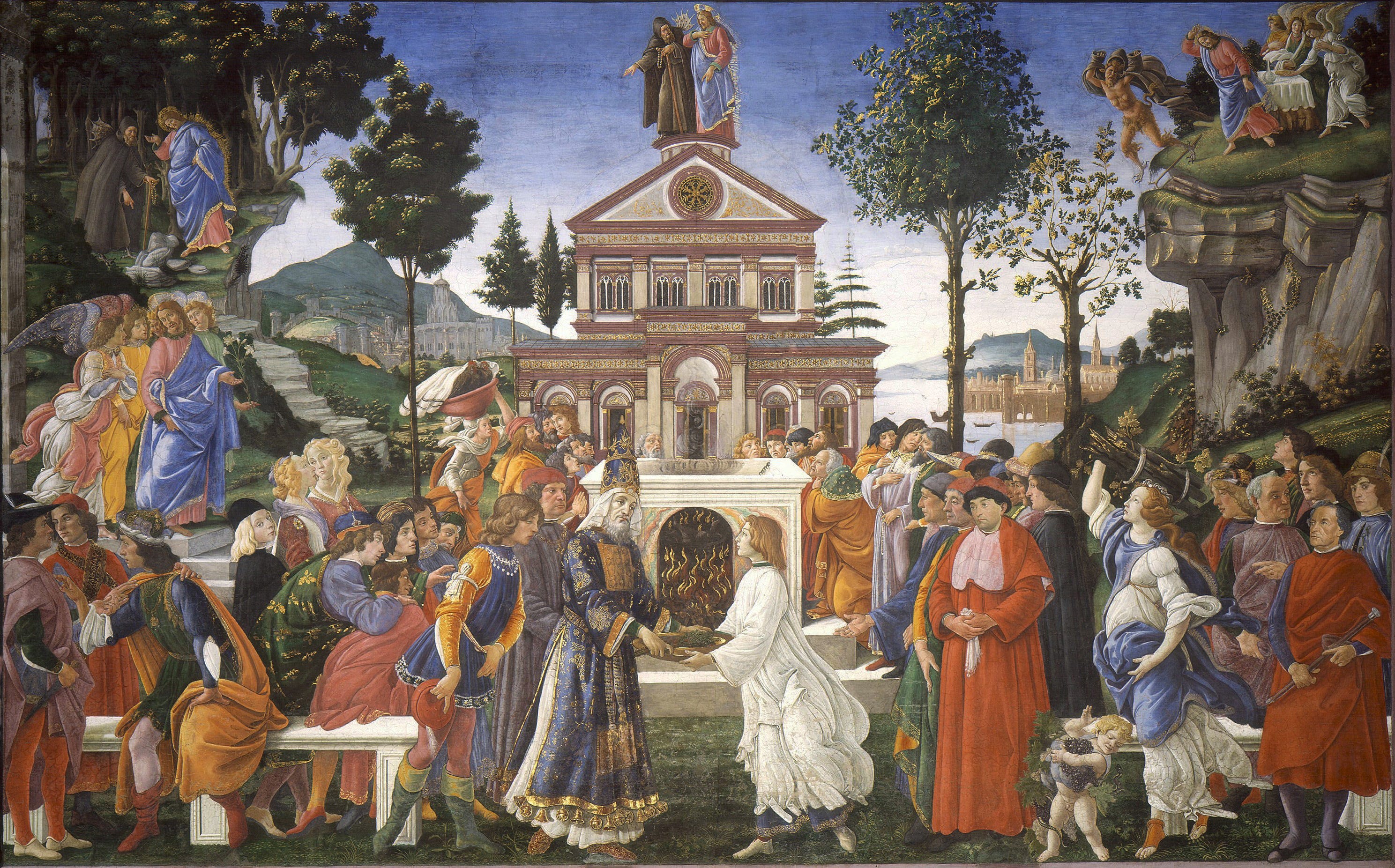
Las Tentaciones de Cristo (The Temptations of Christ) by Sandro Botticelli, Public domain, via Wikimedia Commons.
Inspiration
Once again, this poem came from the Creative Writing group I help lead. One of our students suggested Lent as the topic-prompt, and my first thought-image was of an Ash Wednesday Cross.
This is also my first concrete poem, where the poem takes the shape of a picture.
Besides the imagery of the ash cross, the poem is layered with meaning from the perspective of a protestant who did not grow up celebrating Ash Wednesday or Lent. (But I do have incredible respect for those that do.)
I draw (pun intended) a parallel of the ash being applied to being anointed with oil. And references of how Jesus’s sacrifice saves us from eternal judgement.
However, my favorite is the tension in the to, so to speak, from the saying, “Ashes to ashes, dust to dust.” With the to being the breath of life we have.
By the sweat of your brow
    you will eat your food
until you return to the ground,
    since from it you were taken;
for dust you are
    and to dust you will return.”
Genesis 3:19 NIV
Thank You, Jesus, for saving us from the curse of death by giving Your life. Thank You for eternal life with, in, and through You.
Note on image choice: Lent is a 40 day fasting season, and Jesus was tempted at the end of his 40 days in the wilderness. While my poem doesn’t touch on temptation itself, it does allude to the consequences of sin that we need to be saved from. Regardless, I chose this image to keep the context (and because I couldn’t find a suitable image of a charcoal cross).